24 hour Intensivist Presence – desirable? Maybe. Efficient, Economic and Effective – Unlikely

Few issues have been more controversial in the past 20 years than the implementation of the intensivist model. Fundamentally this involves delegation of primary responsibility for critically ill patients to a narrow group of clinicians, whose primary training may be in an entirely different specialty. Hence, surgical patients may be managed by internists, and medical patients may be managed by anesthetists. I like to think of intensivists as coordinators of patient care, experts at resuscitation, who pay meticulous attention to detail and careful users of resources. As a result, each organ system does not have it’s own consultant, and medicines, interventions and tests are reduced, saving the institution a lot of money and resources.

Whether or not intensivists improve patient outcomes, versus primary medical or surgical teams rounding on patients, remains controversial. I have written about this in detail elsewhere (here subscription needed).  To summarize: daily rounds by an intensive care specialist improve outcomes in high risk surgical patients; intensive care teams (multidisciplinary) improve outcomes, as does the presence of a ICU medical director who sets standards. An article in Annals of Internal Medicine (conducted by well known intensivists) found that, in a study of >100,000 patients, critically ill patients managed by intensivists had worse outcomes (here). Patients managed by critical care physicians were sicker, had more procedures, and had higher hospital mortality rates than those managed by other physicians. I have always found this article confusing – for example in the non-intensivist model there were hospitals that had critical care fellows but no intensivist! The assumption that leads to the headline (“intensivists kill patients”), is that SAPS II is a good predictor of mortality and that adjustments based on SAPS II can separate out patients. If SAPS is not so good, then adjustments for severity of illness are meaningless. Also, there were significantly more patients transferred from other hospitals and more patients ventilated on admission in the CCM (intensivist) model. This suggests lead time bias: patients with similar severity of illness scores on admission to ICU that have been pre-resuscitated or transferred have worse outcomes.

The Irish government clearly believe in the intensivist model, as they seem to think that having us present in the ICU 24/7 will improve outcomes and save lots of money. In today’s Irish Times:

For the first time, consultants in areas such as emergency medicine, intensive care, neonatology and obstetrics will be rostered on a 24-hour basis, working eight-hour shifts. Dr Reilly has said the proposals could save up €200 million.” (article here). I don’t know how the geniuses in the Department of Health have come up with this number, but it is complete fiction. In addition, for a Hospital to provide 24 hour consultant in house cover for ICU, I calculate that this would require approx €1 million a year in direct salary costs (5 FTEs to cover around the clock plus 2 or 3 more to cover their daytime assignments – remember the EWTD applies to consultants as well). This may appear insignificant compared with the staggering savings that they are anticipating – but there is no systematic proof that over investigation (where available and it is not) at night, and over treatment (with what?) at night and bad decision making, by registrars, is costing the health system a fortune. In fact – there is not a single study published anywhere ever that shows that having a consultant intensivist present for patient resuscitation improves outcomes. Outcome improvement has been demonstrated in scenarios where patients have received timely fluids and antibiotics, and subsequent care with ventilator strategy, sedation and mobilization. Has anyone ever studied the 24 hour intensivist model? Yes they have….

A study in the Lancet in 2000 suggested that 24 hour availability of intensivists (the current model in ALL Irish level 3 ICUS) significantly improved outcomes (here). A group from Saudi Arabia claimed the 24/7 staffing led to similar mortality out of hours as within weekday hours (here) proving – well nothing. A nice pro-con debate on this topic can be read in Critical Care (here). A passionate plea for 24/7 coverage can be read in the “blue journal” (here). A core discussion point is that patients that are admitted out of hours (9-5 Monday to Friday) appear more likely to die. This assumes that worse outcomes are due to lack of consultant staffing in the ICU rather than confounders like: patient was getting sick, but no GP available, no elective surgery admitted out of hours, fewer investigations (radiology) available out of hours, patients on wards not being seen by primary care team out of hours etc. In other words, it may be the health system rather than the absence of continuous critical care consultant staffing that is at fault. A study from Paris suggested that out of hours admission patients did better! (here). A US study suggested no difference (here). Indeed, even in July changeover season, mortality is not greater (here). Moreover, papers that claim cost savings tend to massage their data (here).

In the NEJM in May 2012, a group from Pittsburgh looked at night time physician (intensivist) staffing in ICU versus outcomes in North America (article here). What the study showed, in a nutshell, was if the hospital had an intensivist and a critical care team during the day, having a consultant present, on site, at night made no difference to outcomes (our current model in Ireland). However, in hospitals where there was no critical care team during the day (low intensity staffing), having an intenisivist at night improved outcomes [I am still trying to figure out what kind of ICU would pay a consultant at night but not during the day – perhaps they were covered by Tele-ICU]. Also, having any doctor dedicated to the ICU at night (a resident) improved outcomes – very much our model in Ireland.

So, before we are forced to embrace 24/7 cover perhaps it is worth questioning why and for what benefit. I am not suggesting that there should not be 24/7 anesthesia, EM  or obstetrics (where you would anticipate fewer lawsuits, I presume) coverage, I am just relaying the best current evidence, which is that expending 5 FTEs worth of staff to cover 24/7 in adult ICU is not supported by best available evidence.

At last – Chloride is nephrotoxic

For years I have been trotting around the world telling everyone that NaCl 0.9% is evil, because each litre delivers 50mmol of HCL and chloride is nephrotoxic. This belief has come from a series of studies in volunteers (reduced GFR, reduced splanchnic perfusion, reduced cortical blood flow) and observations (increased contrast nephropathy with NaCl versus NaHCO3. I suggested that the CHEST trial failed to prove that HES was dangerous because the control fluid was saline. But where was the real proof of nephrotoxicity.
Here it is in JAMA (click here).

A group in Melbourne, Australia, performed a sequential patient cohort study during 2 time periods: in phase 1 any IV fluid could be used; in phase 2 (the following year), chloride rich fluids were unavailable, so balanced salt solutions only could be prescribed.

Chloride administration fell considerably: from 694 to 496 mmol/patient from the control period to the intervention period. Patients in the chloride rich period had significantly worse renal outcomes: the mean serum creatinine level increase while in the ICU was 22.6 μmol/L (95% CI, 17.5-27.7 μmol/L) vs 14.8 μmol/L (95% CI, 9.8-19.9 μmol/L) (P = .03), the incidence of injury and failure class of RIFLE-defined AKI was 14% (95% CI, 11%-16%; n = 105) vs 8.4% (95% CI, 6.4%-10%; n = 65) (P <.001), and the use of RRT was 10% (95% CI, 8.1%-12%; n = 78) vs 6.3% (95% CI, 4.6%-8.1%; n = 49) (P = .005). In other words – patients given balanced chloride fluids had a 3.7% reduction in the risk of needing dialysis (NNT <30). As you would expect, there was no difference in mortality figures.

The accompanying editorial can be read here.

No I won’t do it and here is the proof!

As a junior doctor how many times were you called to replace an iv catheter on a veinless patient because with was 3 days old (and “hospital policy” and all that). There was no point asking to see the evidence on which this “policy” was based. Whatever! – here is the counter evidence, and it is in the Lancet (here).

The study in question was a multicentre, randomised, non-blinded equivalence trial recruited adults (≥18 years) with an intravenous catheter of expected use longer than 4 days from three hospitals in Queensland, Australia in 2008-09 (why so long to publish?). There were 3283 patients randomised (5907 catheters- 1593 clinically indicated; 1690 routine replacement).

The mean time the iv cannulae lasted when they were in situ on day 3 was 99 h (SD 54) when replaced as clinically indicated and 70 h (13) when routinely replaced. In other words – not routinely changing the catheter resulted in it being in place for 1.25 extra days. Phlebitis occurred in 114 of 1593 (7%) patients in the clinically indicated group and in 114 of 1690 (7%) patients in the routine replacement group: ABSOLUTELY NO DIFFERENCE, NONE, STOP ASKING ME LEAVE ME ALONE!

So, if the iv site looks ok – it is ok. Don’t go prodding the patient.

Just when you thought it was unsafe….HES again!

A couple of weeks ago I announced the imminent death of colloid. Now it’s back with another “Safe” trial (known as CHEST) from our colleagues in Australia and New Zealand (here). The study enrolled a colossal number of patients (7000) to either isotonic saline (IS) or Voluven (R). This is a 130/0.4 tetrastarch in isotonic saline. I now understand the kerfuffle over the 6s trial (of tetraspan) that mislabeled 130.42 in balanced salt as 130/0.4 (read here). The paper should be subtitled: “ours – the starch that doesn’t kill!” Perhaps…
The authors randomly assigned 7000 patients who had been admitted to an intensive care unit (ICU) in a 1:1 ratio to receive either 6% HES with a molecular weight of 130 kD and a molar substitution ratio of 0.4 (130/0.4, Voluven) in 0.9% sodium chloride or 0.9% sodium chloride (saline) for all fluid resuscitation until ICU discharge, death, or 90 days after randomization. The patients were permitted 50ml/kg HES per day and then were given saline. Similar to the SAFE (albumin) trial, clinicians were permitted to resuscitate patients according to their own goals and preferences.
The primary outcome was death within 90 days. Secondary outcomes included acute kidney injury and failure and treatment with renal-replacement therapy.
There was no mortality difference. A total of 597 of 3315 patients (18.0%) in the HES group and 566 of 3336 (17.0%) in the saline group died (relative risk in the HES group, 1.06; 95% confidence interval [CI], 0.96 to 1.18; P=0.26). There was no significant difference in mortality in six predefined subgroups. Renal-replacement therapy was used in 235 of 3352 patients (7.0%) in the HES group and 196 of 3375 (5.8%) in the saline group (relative risk, 1.21; 95% CI, 1.00 to 1.45; P=0.04).
HES was associated with less renal injury than saline, by RIFLE criteria, but post hoc creatinine and urinary output were worse for HES In the HES and saline groups, renal injury occurred in 34.6% and 38.0% of patients, respectively (P=0.005), and renal failure occurred in 10.4% and 9.2% of patients, respectively (P=0.12). There was a 1.2% absolute increase in the risk of needing renal replacement therapy (p<;0.5) in the HE’S group.
HES was associated with significantly more adverse events (5.3% vs. 2.8%, P<;0.001). These included itching, skin rash and “other” (not explained).

A few comments: the mortality rate for a critical care study was astonishingly low, suggesting that the addition of surgical patients (42%) and some entry restrictions may have biased the study [Of the 7000 patients 2,876 were admitted from the operating room]. Almost 10% of patients came from another hospital. Only 1 in 4 came from the emergency department. So there is likely lead-time bias (incidentally, this distribution is near identical to the 6S study. It is highly unlikely that the majority of patients received, exclusively, one of these investigation fluids prior to ICU admission. Patients were in the ICU for 10 or 11 hours prior to randomization: the “golden window”. The patients should have been resuscitated by this stage. This is suggested by the almost ludicrously small amount of fluid that patients received day 0 (see below).

As expected HES patients received less fluid early on, but this did not translate into better outcomes. What is surprising is how little fluid the patients received in the first 24 hours (1500ml to <;2000ml net fluid balance). Patients received between 1000ml (HES) and 1500ml (IS) in addition to study fluids. In fact they seem to have gotten a lot more non study fluid than study fluid. This is presumably due to the 50ml/kg limit (400ml for an 80kg patient). As the on study fluid of choice was IS, this was really a crystalloid plus colloid versus crystalloid study. Indeed patients almost exclusively received IS
It is remarkable how little fluid the patients accumulated over the first 3 days (by the end of day 3 the IS group appear to have a net negative balance). What ever way you look at it, patients received significantly less fluid than in the 6S study (nearly 6L day 1). I return to my previous observations: nearly 50% surgical patients, with resolving stress responses, patients probably already resuscitated before randomized to the study.

It would have useful to know the electrolyte and acid base status. These patients all received a lot of chloride: what proportion of the had hyperchloremic acidosis?

It is very hard to make anything of the renal function tests in this study. On first sight the 36% rate of renal dysfunction at baseline was similar to 6S. But Scandanavian patients were significantly sicker. They had a mortality rate of 43-50%, consistent with other sepsis trials (such as VISEP). RRT use in the 6S study was 16% in the Ringer’s acetate group versus 5.8% in the IS group in this study. So I would be inclined to ignore RIFLE numbers and consider “real” kidney injury to be represented by the need for RRT.

So, how to evaluate this study? Does this study demonstrate the safety of HES in critical illness? No, it just shows that HES doesn’t increase mortality versus isotonic saline. They may be equally bad. Does this paper conflict with the 6S study? Only 30% of patients in the study were septic, the mortality was substantially lower in this study and it is likely that HES worsens outcomes in patients that require more of it (i.e. sicker patients). The onus of proof is on the intervention: HES demonstrates no mortality advantage over crystalloid, it may worsen outcome, it may be associated with more organ (particularly kidney) dysfunction. I am less likely to use these products in ICU. However, there is still a small argument for colloid administration in the peri operative period based on a series of oesophageal Doppler studies (from the UK). It is highly unlikely that 500ml HE’S will harm a patient. However, I don’t quite see the point: HES is expensive compared with crystalloid and only appears to have a marginally better volume expanding effect: why take the risk without clear benefit.
I presume some clever scientist will take this, the 6S and other crystalloid-colloid studies and inform us about all of the residual questions in a nice meta-analysis. In the near future, it would be helpful if the CHEST investigators would give us data on chloride levels and acid-base status. Perhaps their next study should be to compare isotonic saline to balanced salt solutions.
Finally, congrats again to the ANZICS trial group for showing the rest of us what can be done.

The sweet smell of obesity

You may recall a movie from a few years ago called “Super Size Me” that featured Morgan Spurlock eating nothing but McDonalds food for a month. If offered a super sized meal, he said – yes. He became lethargic, gained weight and developed a fatty liver. The message was that if you ate highly calorific fatty food, you would become seriously unhealthy. I have argued, for some time, that Morgan should go back to McDonalds for a month and eat the same food, but drink diet sodas. There is an abundance of data that the high fructose corn syrup (HFCS) in US drinks defeats the normal satiety pathways, increases appetite and leads to visceral obesity and metabolic disease (don’t believe me? Click here). Sugar sweetened drinks are likely nearly as bad. I have never understood why anyone overweight would voluntarily drink sugar sweetened drinks when they can get essentially the same product calorie free (“diet” drinks). I remember American colleagues justifying this with comments like “I don’t trust aspartame” (it has been used for 40 years no evidence it causes harm to humans – click here) – the reply <but you trust HFCS! A Frankenfood>.
Last week Philip Boucher Hayes presented an RTE documentary on Ireland’s dietary habits. The programme painted a nice picture of how today’s obesity epidemic is turning into tomorrow’s cancer horror story. It turns out that Irish people are among the biggest sugar consumers in Europe; we are particularly fond of chocolate: we are a nation of carb addicts. Carb addiction shares many of the traits of opioid addiction.
So those of us who have long argued that the obesity epidemic is a problem of excess carbohydrates rather than excess fat will take note of no fewer than 3 papers in this weeks New England Journal. The most interesting of the papers, which came from Holland, randomized children aged 5 to 12 to 8oz (236ml) of sugar sweetened drinks per day (link here) (we don’t know exactly what product but it was not a common brand in Ireland (company) let’s call it “sugar drink”) versus blinded administration of 8oz of calorie free drink per day (“diet drink”). Thats it. They started with 641 normal weight children. 18 months later the children given the sugar drink had gained, on average, 1kg more in weight (2.2 pounds) compared with the other group. Children in the sugar drink group were pudgier (skinfold-thickness measurements, waist-to-height ratio, and fat mass).
So, sugar-drinks make you fat, and diet-drinks probably don’t. But what if we have been drinking sodas for years, are overweight and decide to quit? A second study, of adolescents, conducted in the USA (click here), randomized 224 adolescents (overweight/obese) to a programme (1 year) that involved giving up sweetened-sodas (HFCS). At 1 year there was a 2kg difference in weight and a significant difference in BMI between the 2 groups. This had disappeared at 2 years. In other words, presumably, they started drinking sodas again.
What about that skinny guy that you know who drinks 5 cans of Coke a day. It turns out that if you are genetically predisposed to becoming obese (your parents are overweight) then you are more likely to suffer the adipogenic effects of sweetened sodas (click here). In other words, if you have a belly, don’t give your kids sugar cola  – ever. Don’t start them drinking sodas. Don’t buy sodas.
So here is the issue – they have banned smoking just about everywhere (including potentially in your own car if your children are present), based on very questionable evidence that secondary inhalation of (“passive”) smoke injures you. These data represent clear evidence of the dangers associated with a series of food products with no nutritional value that have a ready made replacement (diet soda) made by the same manufacturers. Shouldn’t we be banning the sale and administration of sugar-sodas to children (I was horrified to hear in the RTE documentary that babies at 6 months were being give carbonated drinks)? Read here to enjoy a wonderful discussion of this topic.
Now if they could only come up with diet pizza, diet chips and diet scones……

Don’t Understand Balloon Pumps – don’t bother

Alas – another intervention bites the dust. For decades the intra-aortic balloon pump has been heralded as the great savior of the patient with cardiogenic shock. If you have always found these devices confusing (when to use, when to wean, what difference 1:1 versus 1:2 augmentation etc), then worry not: they are heading to the Swan Ganz junkyard. In this week’s NEJM the IABP-SHOCK II trial is published (read here). Six hundred patients were recruited in 37 locations in Germany in 3 years – randomized to IAB-counterpulsation at 1:1 or control, essentially catecholamine, therapy. Patients were eligible for the trial if they had had any form of myocardial infarction complicated by cardiogenic shock, or needed an emergency percutaneous coronary intervention. The majority of patients had PCIs and the IABP could be placed before or after.

There is a widespread belief that using IABP improves pump function, restoring cardiovascular health and preventing the development of multi-organ failure. The primary endpoint of the study was 30 day all cause mortality. This is a flawed measure in critical care, as many patients will still be alive at 30 days, awaiting withdrawal of life sustaining therapy. The authors are in the process of collecting 90 day and 6 month data. The authors also looked for evidence of multi-organ failure (using SAPS II), infectious and ischaemic (using lactate) complications.

Previous studies have reported mortality rates of 42-48% in cardiogenic shock. The authors reported 30 day mortality of 39.7% in the IABP group and 41.3% in the control group (not significant). There was no significant difference in any of the other endpoints either..

Criticisms and generalizability? The mortality rate was lower than expected, but this was a heterogenous German population, a single health system, with an average BMI of 27. So maybe the patients were less unhealthy than comparable North American Studies. More likely, the IABP can be added to a long list of devices that receive religious like devotion, but have little clinical benefit. Further data of interest would be whether or not IABP really benefits postoperative cardiac patients. In the meantime, it is likely that we will encounter these devices less frequently in the future.

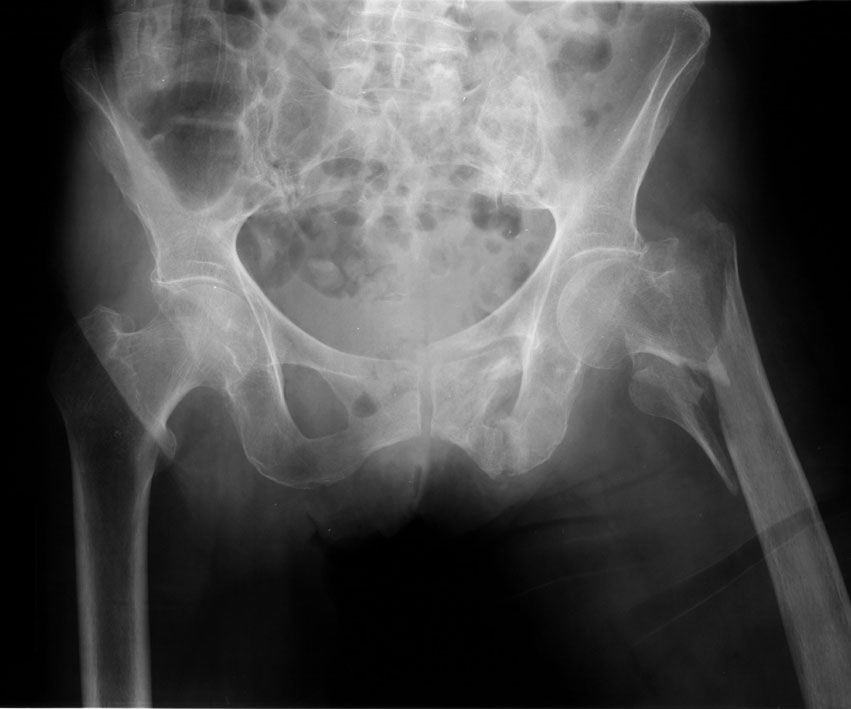
Regional or General Anaesthhesia for Hip Fracture

A 78 year old female patient is brought to the operating room with a fractured hip. She tells you that she wants to “go asleep” for the operation. How do you advise her?
Two papers in July’s Anesthesiology have shed light on this issue. Both studies mine large databases and so care must be taken to avoid over interpretation of data.
Neuman and colleagues (read here) looked at data at 126 New York hospitals over 2 years. Surprisingly, of 18,158 patients only 5,254 (29%) received regional (neuraxial) anesthesia. One in 40 patients died in hospital and, unadjusted, there was no difference in the rates of mortality between GA and RA. Patients receiving regional anesthesia experienced fewer pulmonary complications (359 [6.8%] vs. 1,040 [8.1%], P <0.005). Regional anesthesia was associated with a lower adjusted odds of mortality (odds ratio: 0.710, 95% CI 0.541, 0.932, P = 0.014) and pulmonary complications (odds ratio: 0.752, 95% CI 0.637, 0.887, P<0.001). The benefits associated with regional anesthesia accrued to patients only with intertrochanteric fractures; regional did not benefit patients with femoral neck fractures.

Memtsoudis and colleagues (read here) mined a 530,000 national (USA) database of patients undergoing primary hip and knee arthroplasty. One in 30 patients utilized critical care services. Patients that underwent general anaesthesia, elderly patients and those that has cardiopulmonary complications, were significantly more likely to use critical care. As one would expect, admission to the ICU was associated with significantly increased mortality (2.5% versus 0.1%). Patients were also more likely to enter ICU if they were in smaller non teaching hospitals and if they had hip rather than knee surgery.

Interestingly, this study utilized the Deyo index (here) rather than ASA physical status score. The Deyo index appears to be a strong predictor of outcomes in patients having major orthopedic surgery (here). Co-morbidlty indexes are very useful in clinical practice to predict risk (here). Indeed, the Deyo index and ASA-PS score have been used together to demonstrate adverse outcomes (here).

Giving up Colloid? – Yes we can!

Colloid lovers are distraught by the publication of the 6S study from Scandanavia, which has demonstrated that hydroxy ethyl starches (HES) were associated with poor outcomes (read here). For many of us, however, colloids are like nicotine, caffeine, carbohydrates and heroin rolled into one: we just believe in them. It’s so hard to stop. This month in Critical Care Medicine, a German hospital critical care group proved that you could – quit! (read here – subscription required)
In the Jena intensive care unit, over a 6 year period, clinicians initially used HES, gelatin and crystalloid, then gelatin and crystalloid and ultimately crystalloid only. Bayer and colleagues looked at CVP changes, SvO2, lactate normalisation, normalisation of MAP and discontinuation of vasopressors – comparing each phase against each other. In the first instance, CVP increased faster with colloids than crystalloids, which would be terrific if anyone had ever shown that rapidly increasing CVP improved outcomes. It doesn’t. In fact CVP is next to useless (if you don’t believe me – read this). Fluids are administered to reverse shock, and in each of the phases colloids had no appreciable benefit. Indeed, the amount colloid versus crystalloid was revealing: for HES it was 1:1.4 (HES vs Crystalloid i.e. 700ml Lactated Ringers versus 500ml HES 130/0.4); for gelatin it was 1:1.1 (i.e. 550ml LR versus 500ml gelatin). So there was little, if any, colloid effect. Moreover, patients in the crystalloid group mobilised fluid earlier than those in the colloid group.
So, colloids had no beneficial effect. What about harm? There was more acute kidney injury, worsened renal indices and longer continuous renal replacement therapy in the colloid group. Finally, patients who received colloids spent longer on mechanical ventilators than patients who received crystalloids.
It could be argued that this cohort study was flawed in that, as medicine advance, outcomes necessarily improve. So the newest patients should have had the best outcomes. However, there is no evidence that critical care outcomes are better now than 7 or 8 years ago, nor has the clinical practice move on significantly. From my perspective these data are valid, and may provide a roadmap to navigating ourselves away from the crutch and clutch of colloids.

EuSOS study published – and it’s not pretty!

46,539 patients from all over Europe were recruited to the The European Surgical Outcomes Study over 7 days in April 2011 (read here). Day cases, cardiac and neurosurgical patients were excluded. The overall mortality rate was 4% (nearly 1 in 20 patients). 8% of patients were admitted to ICU or HDU at some stage – but, astonishingly, 73% of those who died never saw a critical care practitioner.
For Ireland 856 patients were recruited into the study; 66 went to critical care beds postoperatively. Median hospital stay was 3 days (1.0-6.0). 6.4% died in hospital, with an unadjusted (for severity of illness) odds ratio of death (compared with the UK) of 1.86. When severity of illness was taken into account the OR of death was 2.61. This puts us down the scale of outcomes with Croatia, Slovakia (better), and Romania and Latvia (marginally worse).
What is truely frightening about these data – is that the reference country, the UK, aside from having a similar population to ours, had worse outcomes than they had expected (mortality 3.6% rather than the predicted 1.6%).
It could be argued that these data are skewed by relatively low numbers, recruitment exclusively in academic medical centers (private hospitals cherry pick the healthiest elective surgery patients), the significant limitations of the ASA physical status grade (between 2 and 3 there really should be 3 more grades – clinicians may have also reported patients as a ASA-PS 2 when they really were a 3), reporting bias etc. Alternatively, our patients might do badly because of  weaker nursing care at ward level and fewer critical care beds per head of population.
If the anaesthesia and critical care community in Ireland wants to look into this further, perhaps a worthwhile study would be an enthusiatic clinician to pull out the charts of all 856 patients and figure out why Ireland did so badly. Comments?