2026 Western Anaesthesia Symposium – Lake House Glasson April 17 and 18th

“A MODERN EXPERIENCED BASED PRACTICE OF ANAESTHESIOLOGY”

You have asked for it – a completely new type of meeting – fewer lectures, more interaction. This year we are premiering the “Metasession” where common questions and controversies will be addressed by an expert panel “In Conversation.” Plus the usual workshops, posters, case presentations and, of course, it wouldn’t be WAS without the controversies: “So you think you know about….”

Registration: EVENTBRITE

Hosted by Western Anaesthesiology Society, University of Galway, In Conjunction With Portiuncula and Roscommon Hospitals and Approved for CME by the College of Anaesthesiologists of Ireland

Click Below to Download Abstract Submission Form (Scientific Presentations, Research, Audit and Case Presentations)

PROGRAMME

Friday April 17th 2026

Morning Workshops 09.00-13.00 (require additional registration)

Regional Anaesthesia Masterclass (Consultants Only)

Facilitators: John McDonnell  & Niall Cribben (plus faculty)

Airway Workshop

Facilitators: Ciara Hanley & Brian Harte (plus faculty)

1.00  “Poster” Presentations – Trainees

Facilitator: Colm Keane

Research and audit studies are presented by a variety of trainees and students.

2.30 – 4.00 Regional Anaesthesia Metasession

The team will discuss current hot topics in regional anaesthesia, how they approach common and uncommon nerve blocks. There will be discussions about chest wall and abdominal blocks; additives and whether or not they are valuable; ideal block duration; compartment syndromes; anticoagulants and blocks; LAST – is it the dose, the volume or the location that is the main problem

Facilitator: John McDonnell

METASESSION TEAM

Vicentes Roques (Murcia, Spain)

Roman Zuecher (Basel, Switzerland)

John McDonnell (GUH)

Niall Cribben (RUH, GUH)

4.00 – 4.30

Coffee

4.30 – 6.00 Airway Management Metasession

Facilitator: Craig Lyons

METASESSION TEAM

The team will discuss airway strategy, videolaryndoscopy performance, how and when to do awake intubation, VAFI, airway surgery, the use of HFO amongst other things

Craig Lyons (GUH)

Alaistair McNarry (Edinburgy, Scotland)

Tony Hennessy (Cork)

6.15 NAP 8 Quick Overview Aoife Driscoll (Cork)

6.30 – 7.15 Plenary Lecture and Interview

Dr. Alistair McNarry – President of the Difficult Airway Society

Facilitator: Dr Michael Callaghan, UHG

7.30 Barbecue

Saturday April 18th 2026

08.00 Case  Presentation Competition

Facilitators: Mike Scully & Martina Melvin

These are clinical cases that are presented by anaesthesia trainees that illustrates clinical conundrums in anaesthesiology and critical care.

09.15 – 10.45 University of Galway Session

Moderators: Prof. John Laffey & Prof. John McDonnell

Prof. Vincenzo Russotto, University of Turin

“The Physiologically Difficult Airway”

Vicentes Roques (Murcia, Spain) – “AI is coming to Regional Anaesthesia”

10.45 – 11.15 Coffee

11.15- 12.30 SYT Session  “So You Think You Know About…….”

This Hi-Impact session will contain 4 talks about issues relating to anaesthesia and critical care that most of us THINK we understand, but once you peel away the layers we….probably don’t.

Michael O’Connor (Univ. Chicago) “….Large Language Models” ✅

Lua Rahmani (Toronto)– “TCI Propofol….do we have any idea what we are targeting?”

Mai O’Sullivan (GUH) – “You think that Simulation Training is a waste of resources?

Leo Kevin (GUH)  – “Adjuncts to Pain Management in the Operating Room – are we deceiving ourselves?”

Pat Neligan (GUH)  “Preoxygenation – are you doing it all wrong?”

12.30 – 13.15 Plenary Lecture        

Michael O’Connor (University of Chicago) – “Understanding Medical Accidents: What Have We Learned and Failed to Learn Over 20 Years?”

Lunch in the Main Restaurant

Coffee in Exhibit Hall

14.30 – 16.00 Intravenous Anaesthesia Metasession

Facilitator: Dr Lua Rahmani (Toronto)

The team will discuss a range of topics that are current or controversial in Intravenous Anaesthesia. The current role of propofol and whether we are overdosing our patients; propofol vs remimazolam; the use or underuse of ketamine; do we need BIS or equivalent during TIVA? Is there any benefit to “modern” TCI models (Schnider/Eleveld) – and what is the story in elderly, obese and ICU patients? Is TIVA “green”? TIVA in paediatrics, radiology, and ICU; the role of dexmedetomidine, lidocaine, magnesium and all of those other “adjuncts” etc. Is “opioid free anaesthesia” a meaningful advance or just cheap hype?

The METASESSION TEAM:

Lua Rahmani (Toronto)

Eoin Young (Cambridge)

Jacinta McGinley (Crumlin)

20.00 Gala Dinner in the Restaurant

Join us to celebrate another great year in our specialty and in our region. Hosted by Dr Mark Ross, President of WAS. Special Guest Prof. Donal Buggy, President of the College of Anaesthesiologists of Ireland.

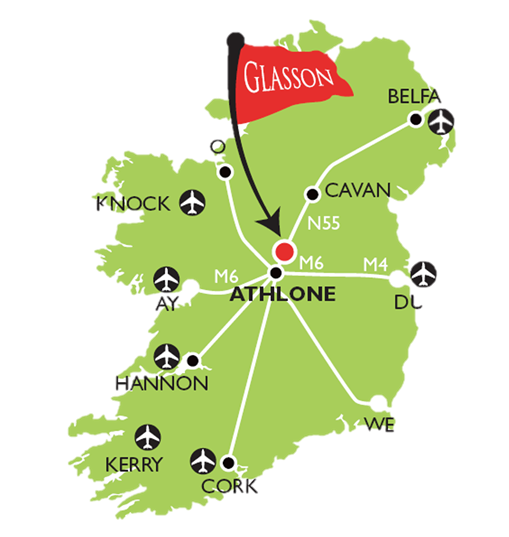
THERE ARE LOTS OF HOTELS AND GUEST HOUSES IN THE AREA – GLASSON IS NEAR ATHLONE AND THE M6 MOTORWAY – AN EASY COMMUNTE FROM ANYWHERE EAST, WEST, MIDLANDS.
Social and Other Activities

Outdoor heated swimming pool on site

Gym on each floor

Hot tubs

18 Hole Golf Course

Driving Range

Paddle Boarding

Kayaking

Row Boats (including motorised ones)
Western Anaesthesia Society
WAS
WESTERN
ANAESTHESIA
SOCIETY

2024 Western Anaesthesia Symposium – Sligo Park Hotel April 12th & 13th 2024

We are super excited to announce the 2024 Western Anaesthesia Symposium, for the first time in the North West in the Beautiful Town and County of Sligo.

The Conference is in the family friendly Sligo Park Hotel – so pack up the family and head to Sligo in the Spring.

Tickets Here

43rd Western Anaesthesia Symposium

PROVISIONAL PROGRAMME

(this programme may be amended at any time prior to the conference)

Friday April 12th 2024

08.00 – 13.30 Fusic Echo Course (ticketed event)

Peter Moran & James Day

09.00 – 13.30 Airway Course (ticketed event)

Ciara Hanley & Brian Harte

13:30-14:30 POSTER PRESENTATIONS

Chair: Colm Keane

14.30 – 15.00 Session 1 Clinical Fellowships session

Chair: David Cosgrave

Ger Kavanagh – Regional Anaesthesia (15 mins)

Eva Corcoran – Obstetric Anaesthesai (15 mins)

Aine McCarthy – Airway/Sim (15 mins)

Eoin Cashman – Tutor/Education (15 mins)

15.00-15.30 Coffee Break

15.30 – 16.30 Session 2 Anaesthesiology Review (best papers)

Chair: Sinead Bredin

Practice Update: Best clinical papers in Anaesthesia

1. Sinead Farrell

2. Sinead Bredin

3. Colm Keane

17.00 – 18.00 Session 3

Anaesthesiology Review: Paediatrics

Chair: Mark Ross

  1. Paediatric transfer/ cases Suzanne Cronly (30 mins)
  2. Paeds cases Mike Callaghan (15 mins)
  3. Paeds cases Mark Ross (15 mins)

18.00 – 19.00 Session 4: Medico-legal issues

Tom Quick, Neurosurgeon “Can you fix a nerve?” (30 mins)

Seamus Breen, Barrister “Medicine and the law- a practical perspective”(30 mins)

19.15 – 20.00 Session 5 Plenary Lecture – Brian Kinirons (45 mins)

20.30 BUFFET DINNER (Included in Registration)

Saturday April 13th 2024

8.00 – 09.00 Session 1 Case Reports – O’Beirne-Costello Medal

Chair: Michael Scully (call for abstracts)

9.15 – 10.45 Session 2: NELA: National Laparotomy Audit Group (QI methodology)

Chair: Anne Dolan

1. Margaret Coakley Anaesthesia (30 mins)

2. Mia Humphreys Geriatrician (30 mins)

3. Sarah Churchill NELA Audit lead (30 mins)

10.45 – 11.10

Coffee Break

11.10 – 12.40 Session 3: University of Galway Academic Session

Chair: John Laffey

1. Peter Doran Chair of Clinical Trials Group, University of Galway (45 mins)

2. Craig Lyons Science in Anaesthesia (45 mins)

12.45– 13.30 Session 4 Plenary Lecture

Chair: Peter Moran

James Day Oxford (45 mins)

Lunch (Included in Registration)

14.30 – 16.30 Session 5: Obstetric & Critical Care Anaesthesiology

Dave Cosgrave

Ciara Hanley

Pat Neligan

Rachel Jooste

SOLAR trial – Saline vs Lactated Ringers’

solar trialThe SOLAR trial, which compared a composite outcomes in perioperative colorectal or orthopaedic patients, assigned to Lactated Ringers’ (similar to Hartmann’s) solution – over 2 week blocks over a few years (8,616), has been published this month in Anesthesiology. The median volume of fluid administered in the perioperative period was 1.9L, and, no surprise here – there was no difference in outcomes.

Here is the blurb from the abstract:

“Among 8,616 qualifying patients, 4,187 (49%) were assigned to lactated Ringer’s solution, and 4,429 (51%) were assigned to saline. Each group received a median 1.9 l of fluid. The primary composite of major complications was observed in 5.8% of lactated Ringer’s versus 6.1% of normal saline patients, with estimated average relative risk across the components of the composite of 1.16 (95% CI, 0.89 to 1.52; P = 0.261). The secondary outcome, postoperative acute kidney injury, Acute Kidney Injury Network stage I–III versus 0, occurred in 6.6% of lactated Ringer’s patients versus 6.2% of normal saline patients, with an estimated relative risk of 1.18 (99.3% CI, 0.99 to 1.41; P = 0.009, significance criterion of 0.007). Absolute differences between the treatment groups for each outcome were less than 0.5%, an amount that is not clinically meaningful.”

The two litres of Saline / LR did not cause acidosis or meaningful increase in plasma chloride concentrations at 24 hours – chloride rose in both groups initially and then fell off. If the median volume of fluid was 2L – then there was a median difference in chloride intake of 80mmol – roughly what is in half a litre of saline. There is good reason to believe that hyperchloraemic fluids (such as LR and Saline) in lowish volume (2L) don’t change acid base status, due to dilution of albumin and then clearance.  It would have been really helpful to know what, if any, iv fluid was given post op and how much sodium and chloride the patients received over the 3 days of the stress response.

These results differ from the SMART-MED and SALT-ED trials – which despite extraordinarily small volumes of fluid, purported to show an increase in complications – particularly renal with saline. Presumably, critically ill and emergency room patients are at greater risk for organ dysfunction, and the additional sodium and chloride pushed a few “over the edge.”

An impressive study that shows that any anaesthesia department can do important research just by altering one component of “what we always do” every couple of weeks and then looking at outcomes from a largish cohort. It won’t change my practice, and I would dearly have liked to see the study done with plasmalyte-148 rather than LR.

Beachchair and Blood Pressure

BeachChairMAPIt is now more than 5 years since the Anesthesia Patient Safety Foundation highlighted the risk of central nervous system injury following anesthesia for shoulder surgery (SS) in the Beachchair position (BCP) (click here). Although we can never be certain, it appears likely that such injuries – principally devastating stroke, results from hypoperfusion and watershed ischaemia. Most anesthetists agree that, in the seated position, the mean arterial pressure as measured by a brachial cuff, under-estimates the pressure at the circle of Willis by 15mmHg or more. The safe lower range of MAP with regard to cerebral auto regulation remains unclear, but it is certainly not below 50mmHg (click here). Regardless, if we are to believe in the “Waterfall” effect of blood pressure, then a MAP of 65mHg from an arm BP cuff is marginal. If an arterial line is place – a procedure rarely performed in orthopedic shoulder patients – the transducer should be sited at the external auditory meatus. Although there are proponents for cerebral oximetry as a monitor in this setting – I do not believe that data are sufficient to demonstrate sensitivity and specificity of this device (here). The majority of experts in the field agree that the best option is to keep BP as close to baseline as possible if general anesthesia is administered for SS in BCP (here here and here). Clearly – “induced hypotension” is a bad idea in this setting. Also, the placement of the BP cuff on the leg or ankle (so that it does not cut of the iv line periodically) would appear most unwise. In one paper from Korea (click here), ankle blood pressure was substantially higher (up to 30mmHg for systolic pressure, 20mmHg mean pressure) compared with brachial pressure in the Beachchair position. In other words – if you are using an ankle cuff, the measured blood pressure (MAP) may be 35mmHg or more higher than the pressure seen at the circle of Willis.

My own practice is to use a brachial cuff and administer a phenylephrine infusion to keep the MAP above 75mmHg (or at the normal awake range for the patient). This appears to be the best approach based on my reading of the literature and available technologies. I would urge orthopedic anesthetists in the West to read the articles referenced here and come up with their own protocols. Comments?

Troponin Leak Postop – what does it mean?

vision studyTwenty years ago perioperative myocardial ischaemia was a relatively easy thing to diagnose – we checked ECG looking for ST segment and T wave changes, and looked for an MB-CK rise. Then troponin arrived, and suddenly the proportion of patients with perioperative ischaemia increased drastically. For many of us, the report of a “postoperative troponin leak” results in a shoulder shrug: we don’t know what it means, we don’t really know the long term implications.

Thankfully, a landmark study, VISION (click here), has provided us with quality epidemiologic data. This was a cohort study of 15000 patients >45 years that underwent non cardiac surgery and had troponin T (TnT) measured in the first 3 postoperative days. All patients had to have procedures that required overnight stay in hospital. The main outcome measure was 30 day mortality.

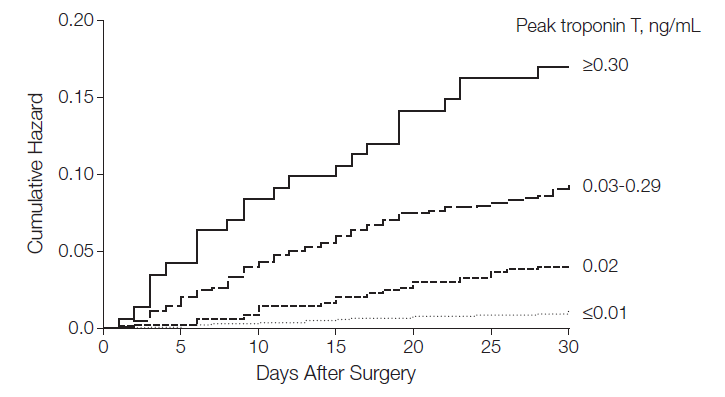
After 30 days 1.9% of patients had died. Patients were more likely to die if their peak TnT level was 0.02 ng/ml (versus reference range of <0.01 ng/ml). This occurred in 11.6% of patients. The greater the TnT level, the more likely the patient was to die. They were able to stratify risk depending on TnT levels. Patients with a peak TnT value of 0.01 ng/mL or less, 0.02, 0.03-0.29, and 0.30 or greater had 30-day mortality rates of 1.0%, 4.0%, 9.3%, and 16.9%, respectively (figure above).

Risk was expressed in terms of Hazard Ratio (HR): greater HR = more likely adverse outcome with 1 being equivalent to no additional risk, <1 lower risk, >1 higher risk. Peak TnT of 0.02 ng/mL (adjusted hazard ratio [aHR], 2.41; 95% CI, 1.33-3.77); 0.03 to 0.29 ng/mL (aHR, 5.00; 95% CI, 3.72-6.76); and 0.30 ng/mL or greater (aHR, 10.48; 95% CI, 6.25-16.62).

Who was at increased risk? The older the patient the higher the risk. Emergency surgery, general surgery, neurosurgery were associated with increased risk. Vascular surgery was not, although the presence of peripheral vascular disease, COPD, previous stroke, coronary arterial disease and cancer did predict adverse outcome. Diabetes, obesity, afib, OSA, hypertension, orthopaedic/thoracic urology surgery – did not predict adverse events.

Conclusions: these data demonstrate the efficacy of TnT measurement in determining perioperative prognosis. 1in 25 patients with a peak TnT measurement of 0.02ng/mL,1 in11patients with a peak TnT measurement of 0.03 to 0.29ng/mL, and 1 in 6 patients with a peak TnT measurement of at least 0.30ng/mL will die within 30 days of surgery. Two questions arise from this study: 1. should we be routinely measuring TnT postoperatively in surgical inpatients >45 years; 2. If the patient has a troponin leak – what should be do then: PCI, aspirin, clopidogrel, statins, betablockers, all of the above, none of them? Will routine measurement of TnT result in a dramatic increase in cardiology consultations with little evidence that there are interventions that may improve outcomes in this setting?

Withold ACE inhibitors for surgery? Think Again

Anecdotally, the majority of anesthetists withhold ACE inhibitors (angiotensin converting enzyme inhibitors ACEI)  on the day of surgery because of concerns regarding hypotension, particularly in operations that may involve sympathectomy (spinal anesthesia) or blood loss. This appears to be a particular problem with angiotensin receptor blockers (here). We already know that withholding beta blockers and statins preoperatively is associated with an increase in the risk of myocardial ischaemia (reviewed here). ACEI were the wonder drugs of the 1980s: 1. use of ACE inhibitors provide long-term cardiovascular protection and reduce ischemic events and complications; 2. early ACE inhibitor therapy has been demonstrated to produce improved survival and heart function benefits in patients with acute myocardial infarction; 3. they are remarkably effective drugs in the treatment of heart failure and hypertension; 4.  ACEI delays the progression of diabetic nephropathy. So, is it wise to withhold these drugs in the preoperative period?

The following is a quote from a review on this topic in the Postgraduate Medical Journal: “The use of these agents before surgery has been associated with a variable incidence of hypotension during the initial 30 min after induction of anaesthesia; however, these hypotensive episodes have not been conclusively linked to any significant postoperative complications…” (here).

The following is a quote from an excellent review of the topic of drug withholding in preoperative patients: ACEI “intensify the hypotensive effects of anesthesia induction. Because angiotensin II plays a key role in maintaining circulating volume in response to stressors, volume deficits can occur in ACE inhibitor-treated patients as angiotensin II cannot compensate for venous pooling of blood, resulting in diminished cardiac output and arterial hypotension. However, continued renin-angiotensin system suppression may protect regional circulation, as has been demonstrated by reduced release of cardiac enzymes with ACE inhibitor continuation (compared with interruption) in cardiac surgery patients. ACE inhibitors also have a renal protective effect, preserving glomerular filtration rate in patients undergoing aortic abdominal aneurysm repair or coronary artery bypass graft surgery. Hypotension with ACE inhibition is treatable with sympathomimetics, alpha-agonists, and intravenous fluids.” (here). Essentially the author is referring to phenylephrine and vasopressin.

So, it may surprise you to discover that there are emerging data to support the continuation of ACEI in the preoperative setting, particularly in cardiac surgery patients. A recent article in circulation (here – subscription required – the HSE has a 1 year embargo – cheapskates!) suggests that withholding ACEI after cardiac surgery is associated with increased incidence of non fatal cardiac events:

This was a “prospective observational study of 4224 patients undergoing coronary artery bypass graft surgery (CABG). The cohort included 1838 patients receiving ACEI therapy before surgery and 2386 (56.5%) without ACEI exposure. Postoperatively, the pattern of ACEI use yielded 4 groups: continuation, 915 (21.7%); withdrawal, 923 (21.8%); addition, 343 (8.1%); and no ACEI, 2043 (48.4%). Continuous treatment with ACEI versus no ACEI was associated with substantive reductions of risk of nonfatal events (adjusted odds ratio for the composite outcome, 0.69; 95% confidence interval, 0.52–0.91;P=0.009) and a cardiovascular event (odds ratio, 0.64; 95% confidence interval, 0.46–0.88; P=0.006). Addition of ACEI de novo postoperatively compared with no ACEI therapy was also associated with a significant reduction of risk of composite outcome (odds ratio, 0.56; 95% confidence interval, 0.38–0.84; P=0.004) and a cardiovascular event (odds ratio, 0.63; 95% confidence interval, 0.40–0.97;P=0.04). On the other hand, continuous treatment of ACEI versus withdrawal of ACEI was associated with decreased risk of the composite outcome (odds ratio, 0.50; 95% confidence interval, 0.38–0.66; P<0.001), as well as a decrease in cardiac and renal events (P<0.001 and P=0.005, respectively).”

There are some unpublished data that continuing ACCEI up to surgery (and presumably afterwards) is associated with lower 30 day mortality (here). Preoperative use appears to be associated with fewer major adverse events after cardiac surgery (here), and even when no benefit has been demonstrated the agents appear to be safe (here).

So, think twice before you stop the ACEI in your preoperative visit. Nevertheless, I am still going to avoid these agents when anesthetizing patients in the beach chair position (here).

EUSOS follow up – is it the beds?

Over the next few months I am sure that the real reasons for the comparatively poor outcomes of Irish patients in the EUSOS study will emerge. In the meantime, we can only guess the reasons. Aside from blaming surgeons for poor patient selection (which is suspiciously convenient), case volume may be a problem, the time of day (exhaustion), the amount of emergency surgery (including case volume) or the issue may lie in our own backyard – in the availability of beds for high risk postoperative patients. Emergency surgery patients, in particular, do poorly.

A US study of 25,710 nonemergency colorectal resections performed at 142 hospitals reported a 1.9% (492 patients) mortality rate. For emergency colorectal resection the mortality rate was 15.3% (780 of 5,083 patients). Fifty percent of emergency surgery patients had at least 1 complication versus 24% of elective surgery patients. This is horrifying.

The first report of the UK emergency laparotomy network (here), published in the BJA, presents similar mortality data. As a guide, mortality rates for major elective general surgery have been reported as follows: colorectal resection – 2.7%,  oesophagectomy – 3.1%, gastrectomy – 4.2% and liver metastasis resection – 1%. In this study (data from 1853 patients were collected from 35 NHS hospitals) the unadjusted 30 day mortality was 14.9% for all patients and 24.4% in patients aged 80 or over.

We are aware that emergency surgery patients come in at all hours of the night and are frequently operated on by junior doctors. The time of day was an issue (table below) – 30 day mortality was 50% higher if surgery took place between midnight and 8am. Obviously confounders may be present – surgeons may only take the sickest patients to theatre at night, and this may represent selection bias.

Time of day* n Consultant anaesthetist present (%) Consultant surgeon present (%) 30 day mortality (%)
08:00–17:59 1044 75.2 80.8 14.2
18:00–23:59 442 54.8 67.7 17.8
00:00–07:59 152 40.8 61.8 20.3

Bad outcomes occurred for patients admitted under a medical service who actually had a surgical problem, increasing age, increasing ASA physical status.

What about beds? “Of the patients who were felt to need intensive care immediately after surgery, 99% were transferred to a level 3 bed. Similarly, 89% of those who were judged to require a high-dependency bed received this level of care, with a further 4% receiving level 2 care in an ICU bed. Mortality in patients returning to the ward (level 1) was 6.7%, HDU 10.1%, and ICU 30.7%. 2.2% of patients were cared for after operation in an extended recovery area (presumably because there was no HDU bed available), and this group had a mortality of 13.5%. For the group of patients aged 60 or greater, and of ASA III or more (∼50% of all patients), 22% returned to the general ward after operation and had a mortality of 17.8%.” One must presume that this 22% represented at least part of the 11% that didn’t get the needed HDU beds. Hence, one could crudely argue that the patients that needed HDU beds but didn’t get them had an absolute mortality risk increase of 7.7% (the authors do not give us sufficient data to make direct comparisons, but more than 50% of patients were >60y and ASA III or greater). The overall mortality for patients sent to a regular ward was 6.7%, which appears to be very high when compared with data from general elective surgery (above). However, a recent study of all 160,920 patients who underwent bowel resection for colorectal cancer between 1998 and 2006 in the English NHS reported a mortality rate of 6.7%

These data at least suggest that lack of availability of a HDU/ICU bed significantly increases the risk of poor postoperative outcomes for emergency surgical patients.

The utilization of critical care services has been known to be suboptimal for many years. A previous study, published in Anaesthesia (here) looked at 26000 patients undergoing surgery in an NHS trust: “only 852 (35.3%) high-risk patients were admitted to a critical care unit at any stage after surgery. Of 294 high-risk patients who died, only 144 (49.0%) were admitted to a critical care unit at any time and only 75 (25.6%) of these deaths occurred within a critical care area. Mortality rates were high amongst patients discharged and readmitted to critical care (37.7%) and amongst those admitted to critical care following initial postoperative care on a standard ward (29.9%).” So, inadequate numbers of ICU/HDU beds are associated with poor outcomes, and early discharge (presumably for bed pressure) and readmission is associated with 1/3 of patients dying.

Ireland has a similar number of critical care beds per 100,000 population (6.5/100,000) to the UK (6.6/100,000). In a recent pan European study conducted by Andy Rhodes (here), Ireland ranked 26th out of 31 (UK was 25th) in critical care bed numbers per 100,000. The European average was 11.5. Overall, Ireland ranked 28th/31 for number of acute care beds and  23rd out of 31 for ICU beds as a % of acute care beds. So, we have very few beds for sick patients, and of these very few of them are critical care beds. Ireland spends 7.2% of GDP on healthcare (15th/31) and has the 6th highest GDP in proportion to ICU beds. In other words – we spend very little money comparatively on critical care compared with Europe. This might reflect the fact that we have the 2nd youngest population in Europe (10.4% are 65 or older).

In summary – is lack of critical care beds a likely factor for Irelands poor showing in EUSOS: almost certainly. Do these studies fully explain the difference – no! Unfortunately, the OR death was still 2.6 times the UK with a similar number of ICU/HDU beds. It could be argued that the bed numbers are inflated in Ireland, due to poor distribution between hospitals – community hospitals have underused ICU beds, referral centers have inadequate capacity. But that is another discussion….

At last – Chloride is nephrotoxic

For years I have been trotting around the world telling everyone that NaCl 0.9% is evil, because each litre delivers 50mmol of HCL and chloride is nephrotoxic. This belief has come from a series of studies in volunteers (reduced GFR, reduced splanchnic perfusion, reduced cortical blood flow) and observations (increased contrast nephropathy with NaCl versus NaHCO3. I suggested that the CHEST trial failed to prove that HES was dangerous because the control fluid was saline. But where was the real proof of nephrotoxicity.
Here it is in JAMA (click here).

A group in Melbourne, Australia, performed a sequential patient cohort study during 2 time periods: in phase 1 any IV fluid could be used; in phase 2 (the following year), chloride rich fluids were unavailable, so balanced salt solutions only could be prescribed.

Chloride administration fell considerably: from 694 to 496 mmol/patient from the control period to the intervention period. Patients in the chloride rich period had significantly worse renal outcomes: the mean serum creatinine level increase while in the ICU was 22.6 μmol/L (95% CI, 17.5-27.7 μmol/L) vs 14.8 μmol/L (95% CI, 9.8-19.9 μmol/L) (P = .03), the incidence of injury and failure class of RIFLE-defined AKI was 14% (95% CI, 11%-16%; n = 105) vs 8.4% (95% CI, 6.4%-10%; n = 65) (P <.001), and the use of RRT was 10% (95% CI, 8.1%-12%; n = 78) vs 6.3% (95% CI, 4.6%-8.1%; n = 49) (P = .005). In other words – patients given balanced chloride fluids had a 3.7% reduction in the risk of needing dialysis (NNT <30). As you would expect, there was no difference in mortality figures.

The accompanying editorial can be read here.