Patrick Neligan, Consultant in Anaesthesia & Intensive Care, Galway University Hospitals (c)
Clinical Scenario
A 37 year old female undergoes bilateral mammoplasty. The procedure is performed under general anaesthesia. Prior to incision the wound was infiltrated with 20ml of 1% lignocaine, on each side. Intraoperatively the patient’s temperature was 37.5 degrees celcius, heart rate was 100 to 120 beats/min and blood pressure was 100/50. Prior to extubation, the surgeon injects 5ml of lignocaine 1% subcutaneously into each breast.
Neuromuscular blockade is reversed with neostigmine and glycopyrrolate and the patient returned to the recovery on supplemental oxygen.
Following admission to recovery, the patient complains of dizziness, shortness of breath and paraesthesia around the mouth and tongue. Her temperature is 38 degrees celcius, heart rate 106, blood pressure 90/50, respiratory rate 30. She says that she has a choking feeling. Moments later she loses consciousness and has a grand mal seizure.
What is the likely mechanism of injury?
Local anaesthetics are drugs that produce reversible depression of signal conduction along nerve fibers. Depending on the dose and site of application, they cause analgesia, anaesthesia and neuromuscular blockade.
The first local anaesthetic discovered was cocaine. Subsequent synthesis of alternative agents early in the twentieth century were ester derivatives of benzoic acid. These are known as “ester” local anaesthetics. Lignocaine was synthesized in 1943 – an amide derivative of diethylamino acetic acid (“amides”). Most subsequent agents introduced into practice have been amides due to lower associated incidence of side effects (principally anaphylaxis).
Local anaesthetics work by blocking voltage gated sodium channels. They interrupt the influx of sodium into nerve cells, preventing propagation of the action potential.
The agent, a weak base, is injected as hydrochloride salt in an acid solution – tertiary amine group becomes quaternary and suitable for injection (i.e. dissolves in solution). Following injection, the pH increases (due to the higher pH of the tissues, which is usually 7.4) and the drug dissociates, the degree of which depends on pKa, and free base is released. Lipid soluble (because it is uncharged) free base enters the axon. Inside the axon the pH is lower (because the environment is more acidic), and re-ionization takes place (to BH+). The re-ionized portion enters the Na+ channels and blocks them, preventing depolarization.
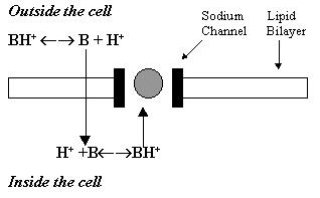
Figure 1: Mechanism of Action of Local Anaesthetic Agents
Although local anaesthetics are administered to be injected locally there is always associated systemic absorption. Adrenaline is commonly added to the local anaesthetic mixture to induce local vasoconstriction and reduce the absorbed dose. However, if sufficiently large amounts of drug are absorbed, either due to excessive administration or due to inadvertent intravascular injection, complications may ensue. Conversely, lignocaine has been used for decades as an intravenous therapeutic agent in the management of cardiac arrhythmias, and reduction in the adrenergic response to surgical incision.
Local anaesthetics exert toxic effects on the cardiovascular and central nervous system. This became apparent in the late 1970s and early 1980s when a series of patients developed profound cardiovascular depression, in some cases fatal, associated with administration of bupivicaine in high dosage. Bupivicaine, particularly its S-enantiomer, binds irreversibly (covalently) to cardiac conduction tissue – blocking sodium, potassium and calcium channels.
Prior to the development of cardiovascular symptoms and signs, the patient will manifest signs of neurologic toxicity (figure 2). At low levels of toxicity the patient may complain of circumoral numbness, higheadeness and ringing in the ears. These symptoms should alert the clinician to stop the administration of local anaesthetic infusions, through implanted catheters such as epidurals. Increasing toxicity leads to visual disturbances, muscle twitching and convulsions (as in this case). Continued toxicity leads to loss of consciousness, coma, respiratory and cardiac arrest.
Symptoms and signs of CNS toxicity are thought to commence with selective blockade of fast sodium channels in the central nervous system and inhibition of gama-aminobutyric acid (GABA) in cortical cerebral inhibitory pathways. Excitatory neurons appear to be more resistant to local anaesthetics. Consequently, at moderate levels of toxicity (figure 2) there is unopposed activity of these excitatory neurons leading to seizures. With progressive toxicity, there is generalized CNS depression. The occurrence of seizures, then, is an important warning sign of imminent catastrophe.
Local anaesthetics agents, in particular lignocaine, have been used as anti-arrhythmic agents. They produce dose dependent depression of cardiac conduction, by blocking sodium channels. This principally affects sino-atrial and atrio-ventricular nodal conduction. Consequently, the PR interval and duration of the QRS complex is prolonged. Further, as all electrical activity in the heart and vascular smooth muscle is depressed, local anaesthetics have a negative impact on myocardial contractility and cause peripheral vasodilatation. Thus there is a dose dependent fall in cardiac output and blood pressure with inability to compensate. Increasing levels of toxicity may cause severe bradycardia, cardiogenic shock and cardiovascular collapse.
What is this cc/cns ratio?
The cardiovascular system is significantly more resistant to the toxic effects of local anaesthetics. Indeed, with moderate CNS toxicity, the increase in excitatory activity may lead to tachycardia and increased cardiac output. However, the onset of convusions is an ominous clinical sign and it is important to anticipate the risk of a devastating cardiovascular event. The cc/cns ratio is the ratio of dosage or blood levels required to produce irreversible cardiovascular collapse to that level required to produce convulsions. The lower the ratio, the more potentially hazardous the drug is. The cardiovascular to CNS ratio for bupivicaine is 2.0, for lignocaine it is 7.1, for ropivicaine it is 2.2. Hence, of the commonly used perioperative local anaesthetic agents, bupivicaine and ropivicaine are potentially significantly more toxic than lignocaine. Thus the appearance of seizures in the patient in question is less of a concern in that she received lignocaine, not bupivicaine. It is believed that the mechanism behind the greater cardiovascular toxicity of bupivicaine is that it much more slowly dissociates from cardiac conduction tissue than lignocaine. This prolongs the refractory period, and reduces conductivity through regular pathways. This significantly increases the risk for malignant ventricular arrhythmias.
Toxicity
Note that by “toxicity” I mean neurologic depression as a direct extension of the pharmacologic effects of the drug. Certain additional factors are likely to increase the risk of neurologic toxicity, these include respiratory (increased PaCO2) and metabolic acidosis, leading to reduced protein binding, or the administration of benzodiazepines or barbiturates.
Toxicity depends on the amount of free drug in plasma; this relates to three factors:
1. Dose given.
2. Rate of injection (the effective dose given).
3. Site of injection (the greater the blood supply to the area injected the greater the systemic absorption). Sites of absorption from greatest to least:
interpleural > intercostal > pudendal > caudal > epidural > brachial plexus > infiltration
(in this scenario the patient received drug principally by infiltration),
TREATMENT
Treatment for CNS toxicity of local anaesthetics is essentially supportive (figure 3). Ensure that the airway is patent and that the patient is breathing spontaneously. Apply supplemental oxygen. Lay the patient flat. Ensure that the patient has iv access and that intravenous fluid is running. Check the patient’s pulse and blood pressure. If the patient is unconscious, a jaw thrust may be required to prevent airway obstruction. Do not place any devices between the patient’s teeth if they are seizing. If necessary place a nasopharyngeal airway.
If the seizure does not rapidly self-resolve, then intravenous midazolam (0.05 to 0.1mg/kg), lorazepam (0.1mg/kg) or diazepam (5 – 10mg) may be administered to control seizure activity. If this fails, phenobarbitone or thiopentone may be administered intravenously. An alternative approach would be to secure the airway following induction of anaesthesia with propofol and administration of a propofol infusion. Hypoxia should be treated aggressively as should acidosis: respiratory acidosis is managed by increasing alveolar ventilation. Metabolic acidosis is resolved with restoration of oxygen flow, intravenous fluids and, in extreme cases, administration of sodium bicarbonate. The treatment for LA induced arrhythmia is Bretylium 7mg/kg. Phenytoin should not be used for seizures, because it is also a sodium channel blocker.
Intravenous intralipid® (20%) appears to be effective at minimizing adverse cardiovascular outcomes. There are many case reports and animal studies that have demonstrated rapid resolution of cardiovascular symptoms associated with this lipid emulsion. Intralipid is the major component of total parenteral nutrition. It is believed that the lipid acts as a bank for local anaesthetic – the drug has more affinity for the lipid than for cardiac tissue; as the amount of buipivicaine bound up to cardiac tissue is reduced, normal contractile function results. There are no randomized controlled trials supporting its use, and it is unlikely that there ever will be (similar to dantrolene for malignant hyperthermia). Although propofol contains lipid, the concentration is insufficient to have a beneficial effect. Intralipid is inexpensive and has a long shelf life; consequently there is no reason why it cannot be stored in any location in which anaesthesia is delivered.
The Association of Anaesthetists in Great Britain and Ireland (aagbi.org) have issued guidelines for the use of intralipid in the event of LA toxicity: initial bolus of 100ml 1.5ml/kg over 1 minute) followed by 400ml (0.25 ml/kg) over 20 mins. Repeat boluses can be administered subsequently: 100ml at 5 minute intervals repeated x2 and then 400ml administered over 10 minutes. CPR should be continued until the circulation has been re-established. If all of this fails – cardiopulmonary bypass may be instituted until the local anaesthetic has been metabolized.
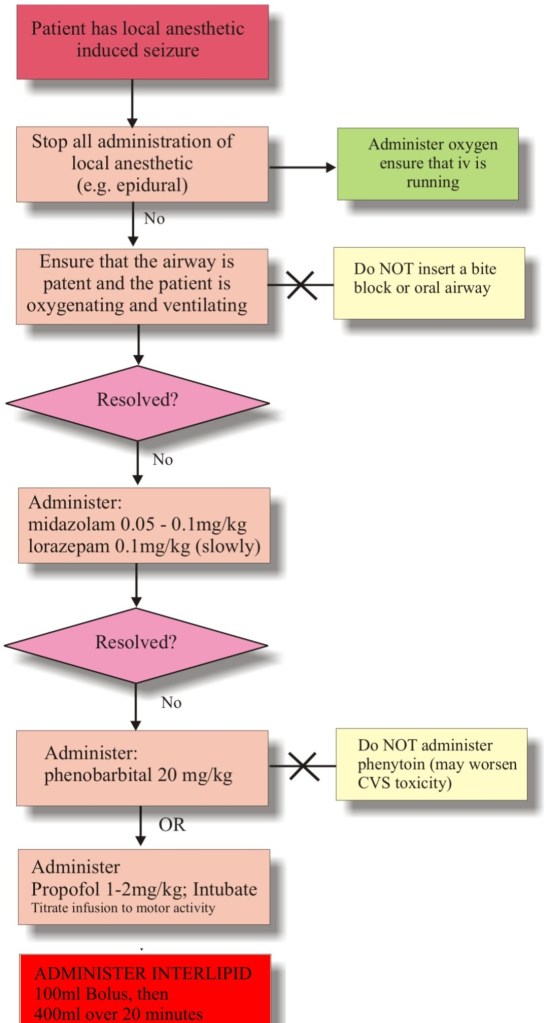
Figure 2: Treatment of Local Anaesthesia Toxicity
Click here for the AAGBI A4 sheet. Click here for the accompanying notes.
CONCLUSIONS
- Local anesthetic toxicity can be seen with local anesthetic wound infiltration, epidural catheter placement, and nerve blocks.
- Signs of low level CNS toxicity from local anesthetics include: circumoral numbness, lightheadedness, and tinnitus.
- Increasingly higher concentrations of local anesthetic toxicity leads to visual disturbances, seizures, loss of consciousness, respiratory and cardiac arrest.
- The greater the blood supply at the site of local anesthetic injection, the greater systemic absorption of the drug.
- The maximum safe doses of local anesthetics are: bupivicaine 2 mg/kg (2.5mg/kg with adrenaline), lignocaine 5mg/kg (7mg/kg with adrenaline), levobupivicaine (chirocaine) 2-3mg/kg, ropivicaine (naropin) 3-4mg/kg, prilocaine 6 mg/kg.
- There are various causes of post-op seizures, including intracranial bleeding following craniotomy, stroke, hypoglycemia, electrolyte imbalance, hypoxia, and drug or local anesthetic toxicity.
- Treatment for CNS toxicity caused by local anesthetics is supportive, including maintaining a patent airway, monitoring vital signs, administering IV fluids, and giving antiseizure medications.
- Intralipid is currently recommended to prevent the development of cardiovascular toxicity associated with LA toxicity. The mechanism of action is unknown.
|
DRUG
|
LIGNOCAINE
|
PRILOCAINE
|
BUPIVACAINE
|
LEVOBUPIVACAINE
|
ROPIVACAINE
|
| Relative potency |
2
|
2
|
8
|
8
|
6
|
| Onset |
5-10 min
|
5-10 min
|
10-15 min
|
10-15 min
|
10-15 mins
|
Duration
without adrenaline |
1-2 hours
|
1-2 hours
|
3-12 hours
|
3-12 hours
|
3-12 hours
|
Duration
with adrenaline |
2-4 hours
|
2-4 hours
|
4-12 hours
|
4-12 hours
|
4-12 hours
|
Max dose
without adrenaline |
3 mg/kg
|
6 mg/kg
|
2 mg/kg
|
2.5 mg/kg
|
3 mg / kg
|
Max dose
with adrenaline |
7 mg/kg
|
9 mg/kg
|
2.5 mg/kg
|
3 mg/kg
|
4 mg / kg
|

 Nothing terrifies an anaesthetist as much as the prospect of a patient waking up blind. It happens, but very infrequently. Who is at risk? What surgeries? What are the risk factors? Is there anything we can do to prevent and treat visual loss?

 AnaesthesiaWest