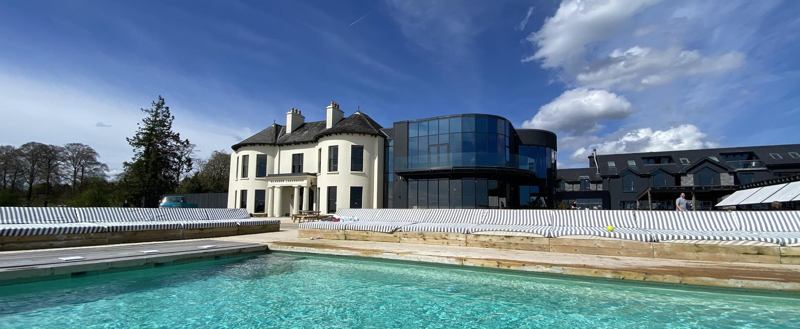
2026 Western Anaesthesia Symposium – Lake House Glasson April 17 and 18th

“A MODERN EXPERIENCED BASED PRACTICE OF ANAESTHESIOLOGY”
You have asked for it – a completely new type of meeting – fewer lectures, more interaction. This year we are premiering the “Metasession” where common questions and controversies will be addressed by an expert panel “In Conversation.” Plus the usual workshops, posters, case presentations and, of course, it wouldn’t be WAS without the controversies: “So you think you know about….”

Registration: EVENTBRITE

Hosted by Western Anaesthesiology Society, University of Galway, In Conjunction With Portiuncula and Roscommon Hospitals and Approved for CME by the College of Anaesthesiologists of Ireland

Click Below to Download Abstract Submission Form (Scientific Presentations, Research, Audit and Case Presentations)

PROGRAMME

Friday April 17th 2026

Morning Workshops 09.00-13.00 (require additional registration)

Regional Anaesthesia Masterclass (Consultants Only)

Facilitators: John McDonnell  & Niall Cribben (plus faculty)

Airway Workshop

Facilitators: Ciara Hanley & Brian Harte (plus faculty)

1.00  “Poster” Presentations – Trainees

Facilitator: Colm Keane

Research and audit studies are presented by a variety of trainees and students.

2.30 – 4.00 Regional Anaesthesia Metasession

The team will discuss current hot topics in regional anaesthesia, how they approach common and uncommon nerve blocks. There will be discussions about chest wall and abdominal blocks; additives and whether or not they are valuable; ideal block duration; compartment syndromes; anticoagulants and blocks; LAST – is it the dose, the volume or the location that is the main problem

Facilitator: John McDonnell

METASESSION TEAM

Vicentes Roques (Murcia, Spain)

Roman Zuecher (Basel, Switzerland)

John McDonnell (GUH)

Niall Cribben (RUH, GUH)

4.00 – 4.30

Coffee

4.30 – 6.00 Airway Management Metasession

Facilitator: Craig Lyons

METASESSION TEAM

The team will discuss airway strategy, videolaryndoscopy performance, how and when to do awake intubation, VAFI, airway surgery, the use of HFO amongst other things

Craig Lyons (GUH)

Alaistair McNarry (Edinburgy, Scotland)

Tony Hennessy (Cork)

6.15 NAP 8 Quick Overview Aoife Driscoll (Cork)

6.30 – 7.15 Plenary Lecture and Interview

Dr. Alistair McNarry – President of the Difficult Airway Society

Facilitator: Dr Michael Callaghan, UHG

7.30 Barbecue

Saturday April 18th 2026

08.00 Case  Presentation Competition

Facilitators: Mike Scully & Martina Melvin

These are clinical cases that are presented by anaesthesia trainees that illustrates clinical conundrums in anaesthesiology and critical care.

09.15 – 10.45 University of Galway Session

Moderators: Prof. John Laffey & Prof. John McDonnell

Prof. Vincenzo Russotto, University of Turin

“The Physiologically Difficult Airway”

Vicentes Roques (Murcia, Spain) – “AI is coming to Regional Anaesthesia”

10.45 – 11.15 Coffee

11.15- 12.30 SYT Session  “So You Think You Know About…….”

This Hi-Impact session will contain 4 talks about issues relating to anaesthesia and critical care that most of us THINK we understand, but once you peel away the layers we….probably don’t.

Michael O’Connor (Univ. Chicago) “….Large Language Models” ✅

Lua Rahmani (Toronto)– “TCI Propofol….do we have any idea what we are targeting?”

Mai O’Sullivan (GUH) – “You think that Simulation Training is a waste of resources?

Leo Kevin (GUH)  – “Adjuncts to Pain Management in the Operating Room – are we deceiving ourselves?”

Pat Neligan (GUH)  “Preoxygenation – are you doing it all wrong?”

12.30 – 13.15 Plenary Lecture        

Michael O’Connor (University of Chicago) – “Understanding Medical Accidents: What Have We Learned and Failed to Learn Over 20 Years?”

Lunch in the Main Restaurant

Coffee in Exhibit Hall

14.30 – 16.00 Intravenous Anaesthesia Metasession

Facilitator: Dr Lua Rahmani (Toronto)

The team will discuss a range of topics that are current or controversial in Intravenous Anaesthesia. The current role of propofol and whether we are overdosing our patients; propofol vs remimazolam; the use or underuse of ketamine; do we need BIS or equivalent during TIVA? Is there any benefit to “modern” TCI models (Schnider/Eleveld) – and what is the story in elderly, obese and ICU patients? Is TIVA “green”? TIVA in paediatrics, radiology, and ICU; the role of dexmedetomidine, lidocaine, magnesium and all of those other “adjuncts” etc. Is “opioid free anaesthesia” a meaningful advance or just cheap hype?

The METASESSION TEAM:

Lua Rahmani (Toronto)

Eoin Young (Cambridge)

Jacinta McGinley (Crumlin)

20.00 Gala Dinner in the Restaurant

Join us to celebrate another great year in our specialty and in our region. Hosted by Dr Mark Ross, President of WAS. Special Guest Prof. Donal Buggy, President of the College of Anaesthesiologists of Ireland.

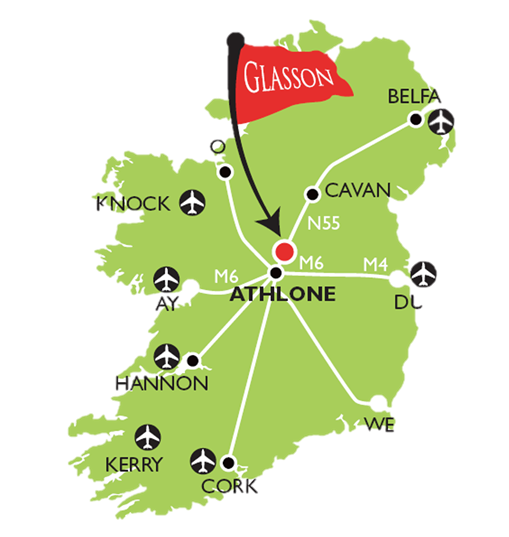
THERE ARE LOTS OF HOTELS AND GUEST HOUSES IN THE AREA – GLASSON IS NEAR ATHLONE AND THE M6 MOTORWAY – AN EASY COMMUNTE FROM ANYWHERE EAST, WEST, MIDLANDS.
Social and Other Activities

Outdoor heated swimming pool on site

Gym on each floor

Hot tubs

18 Hole Golf Course

Driving Range

Paddle Boarding

Kayaking

Row Boats (including motorised ones)
Western Anaesthesia Society
WAS
WESTERN
ANAESTHESIA
SOCIETY

Beachchair and Blood Pressure

BeachChairMAPIt is now more than 5 years since the Anesthesia Patient Safety Foundation highlighted the risk of central nervous system injury following anesthesia for shoulder surgery (SS) in the Beachchair position (BCP) (click here). Although we can never be certain, it appears likely that such injuries – principally devastating stroke, results from hypoperfusion and watershed ischaemia. Most anesthetists agree that, in the seated position, the mean arterial pressure as measured by a brachial cuff, under-estimates the pressure at the circle of Willis by 15mmHg or more. The safe lower range of MAP with regard to cerebral auto regulation remains unclear, but it is certainly not below 50mmHg (click here). Regardless, if we are to believe in the “Waterfall” effect of blood pressure, then a MAP of 65mHg from an arm BP cuff is marginal. If an arterial line is place – a procedure rarely performed in orthopedic shoulder patients – the transducer should be sited at the external auditory meatus. Although there are proponents for cerebral oximetry as a monitor in this setting – I do not believe that data are sufficient to demonstrate sensitivity and specificity of this device (here). The majority of experts in the field agree that the best option is to keep BP as close to baseline as possible if general anesthesia is administered for SS in BCP (here here and here). Clearly – “induced hypotension” is a bad idea in this setting. Also, the placement of the BP cuff on the leg or ankle (so that it does not cut of the iv line periodically) would appear most unwise. In one paper from Korea (click here), ankle blood pressure was substantially higher (up to 30mmHg for systolic pressure, 20mmHg mean pressure) compared with brachial pressure in the Beachchair position. In other words – if you are using an ankle cuff, the measured blood pressure (MAP) may be 35mmHg or more higher than the pressure seen at the circle of Willis.

My own practice is to use a brachial cuff and administer a phenylephrine infusion to keep the MAP above 75mmHg (or at the normal awake range for the patient). This appears to be the best approach based on my reading of the literature and available technologies. I would urge orthopedic anesthetists in the West to read the articles referenced here and come up with their own protocols. Comments?

Is it time to re-evaluate core concepts of Neuro-Intensive Care?

Over the past 2 or 3 decades a variety of technologies have been introduced into the clinical care of the brain injured patient – intraventricular ICP monitoring devices,SjVO2, brain tissue oxygen devices, microdialysis, xenon flow scanning, etc. However, compared with general critical care, the evidence base for protocols based on the utilization of these technologies is poor. There are 3 clinical approaches to managing the patient with traumatic brain injury – an ICP based strategy (the intracranial pressure is targeted at below 20mmhg), a CPP based strategy (cerebral perfusion pressure is targeted above 60mmhg = MAP-ICP) and an anti-adrenergic strategy (the “Lund” approach) that strives to reduce cytotoxic cerebral oedema by administering opioids, beta blockers etc. Many NICUs combine an ICP and a CPP strategy such that patients are administered vasopressors and osmotic diuretics simultaneously. To an outsider this is frequently puzzling, as the major cause or raised ICP is both cerebral oedema and increased blood flow. Hence there is a constant argument about hyperaemic versus hypoaemic brain injury – too much versus too little flow. How do you decide? Also, there is concern that ICP does not monitor global intracranial pressure, but merely a compartment pressure in that part of the brain in which the bolt or catheter has been inserted. Although it is claimed that ICP monitoring is a global standard of care for the management of the brain injured patient (TBI plus GCS<8), clearly this presumes that such patients are admitted to a hospital that can insert ICP measurement devices, and can cope with complications. However, as we are all very aware in Ireland, neurosurgery and neuro-trauma tends to be located in superspecialist centres, remote from where many trauma patients are initially admitted, and in our case – bed capacity in those centres is severely limited. Many patients with TBI are cared for in general ICUs in Ireland without ICP measurement devices. Anecdotally, they appear to be doing pretty well: could it be that ICP monitors don’t make a huge difference.

To do a study of ICP monitors in advanced healthcare systems would be problematic – how could you get IRB approval, in the USA, for example? Despite the appearance of equipoise of opinion, “standards are standards”. Of course, bleeding patients with fevers was a standard of 2,000 years. I had despaired whether or not a proper randomised controlled trial of ICP monitoring would be performed. No longer – here it is (click here pdf available here).

Chestnut and colleagues in this weeks NEJM noted: “The identification of a group of intensivists in Latin America who routinely managed severe traumatic brain injury without using available monitors and for whom there was equipoise regarding its efficacy eliminated that ethical constraint and led to the implementation of the randomized, controlled trial described here.” So, in Equador and Bolivia, the Benchmark Evidence from South American Trials: Treatment of Intracranial Pressure (BEST:TRIP) trial, was performed. The primary hypothesis was that “a management protocol based on the use of intracranial-pressure monitoring would result in reduced mortality and improved neuropsychological and functional recovery at 6 months. Our secondary hypothesis was that incorporating intracranial-pressure monitoring into the management of severe traumatic brain injury would have benefits for the health care system, including a reduced risk of complications and a shorter ICU stay.”

To be included in the study, patients had to be older than 13 and have a GCS of 3 8 at the time of enrollement. The study was a multicenter, parallel-group trial, with randomized assignment to intracranial-pressure monitoring (the pressure-monitoring group – ICP with and intraparenchymal bolt) or imaging and clinical examination (the imaging–clinical examination group – GEG ). Essentially, the control group were managed conservatively, scanned several times and examined carefully – protocol . 324 patient were enrolled and the study ran for 3 years.

“There was no significant between-group difference in the primary outcome, a composite measure based on percentile performance across 21 measures of functional and cognitive status (score, 56 in the pressure-monitoring group vs. 53 in the imaging–clinical examination group; P=0.49). There was no difference in 6 month mortality (39% in the ICP group and 41% in the control group (CEG) (P=0.60)). The median length of stay in the ICU was similar in the two groups (12 days in ICP and 9 days in the imaging–CEG; P=0.25). Although aftercare from TBI in these countries is clearly weak, and 6 month outcomes were relatively poor, 14 day outcomes were comparable with those in wealthy countries, and there was no difference between the groups at that stage either.

Surprisingly, the CEG group received more hypertonic saline, barbiturates and hyperventilation than the ICP group: I can’t quite figure out why – perhaps normal range ICP reassured that clinicians looking after those patients. The interventions in question were part of the protocol.

So, where does this leave us: is the ICP bolt the Swan Ganz catheter of the 2010s? Or does this study show that monitors do not improve outcomes, algorithms that use them appropriately do?

My own opinion – I believe this study at least casts doubt on arbitrary guidelines that continue to accumulate as a means of controlling clinicians clinical practice. It reinforces the importance of clinical examination alongside clinical monitoring, and emphasises the importance of having good doctors at the bedside looking at their patients (as opposed to the telemedicine concept of decision making based on measured data rather than clinical signs). It also emphasises the importance of not over sedating patients, and hence obliterating clinical signs, and slowing recovery. Is it the beginning of the end for ICP monitoring – unlikely, but at least it might row back a little on the “paint by numbers” approach to critical care that has become prevalent over the past decade or so.

Don’t Understand Balloon Pumps – don’t bother

Alas – another intervention bites the dust. For decades the intra-aortic balloon pump has been heralded as the great savior of the patient with cardiogenic shock. If you have always found these devices confusing (when to use, when to wean, what difference 1:1 versus 1:2 augmentation etc), then worry not: they are heading to the Swan Ganz junkyard. In this week’s NEJM the IABP-SHOCK II trial is published (read here). Six hundred patients were recruited in 37 locations in Germany in 3 years – randomized to IAB-counterpulsation at 1:1 or control, essentially catecholamine, therapy. Patients were eligible for the trial if they had had any form of myocardial infarction complicated by cardiogenic shock, or needed an emergency percutaneous coronary intervention. The majority of patients had PCIs and the IABP could be placed before or after.

There is a widespread belief that using IABP improves pump function, restoring cardiovascular health and preventing the development of multi-organ failure. The primary endpoint of the study was 30 day all cause mortality. This is a flawed measure in critical care, as many patients will still be alive at 30 days, awaiting withdrawal of life sustaining therapy. The authors are in the process of collecting 90 day and 6 month data. The authors also looked for evidence of multi-organ failure (using SAPS II), infectious and ischaemic (using lactate) complications.

Previous studies have reported mortality rates of 42-48% in cardiogenic shock. The authors reported 30 day mortality of 39.7% in the IABP group and 41.3% in the control group (not significant). There was no significant difference in any of the other endpoints either..

Criticisms and generalizability? The mortality rate was lower than expected, but this was a heterogenous German population, a single health system, with an average BMI of 27. So maybe the patients were less unhealthy than comparable North American Studies. More likely, the IABP can be added to a long list of devices that receive religious like devotion, but have little clinical benefit. Further data of interest would be whether or not IABP really benefits postoperative cardiac patients. In the meantime, it is likely that we will encounter these devices less frequently in the future.