
2026 Western Anaesthesia Symposium – Lake House Glasson April 17 and 18th

“A MODERN EXPERIENCED BASED PRACTICE OF ANAESTHESIOLOGY”

You have asked for it – a completely new type of meeting – fewer lectures, more interaction. This year we are premiering the “Metasession” where common questions and controversies will be addressed by an expert panel “In Conversation.” Plus the usual workshops, posters, case presentations and, of course, it wouldn’t be WAS without the controversies: “So you think you know about….”

Registration: EVENTBRITE

Hosted by Western Anaesthesiology Society, University of Galway, In Conjunction With Portiuncula and Roscommon Hospitals and Approved for CME by the College of Anaesthesiologists of Ireland

Click Below to Download Abstract Submission Form (Scientific Presentations, Research, Audit and Case Presentations)

PROGRAMME

Friday April 17th 2026

Morning Workshops 09.00-13.00 (require additional registration)

Regional Anaesthesia Masterclass (Consultants Only)

Facilitators: John McDonnell  & Niall Cribben (plus faculty)

Airway Workshop

Facilitators: Ciara Hanley & Brian Harte (plus faculty)

1.00  “Poster” Presentations – Trainees

Facilitator: Colm Keane

Research and audit studies are presented by a variety of trainees and students.

2.30 – 4.00 Regional Anaesthesia Metasession

The team will discuss current hot topics in regional anaesthesia, how they approach common and uncommon nerve blocks. There will be discussions about chest wall and abdominal blocks; additives and whether or not they are valuable; ideal block duration; compartment syndromes; anticoagulants and blocks; LAST – is it the dose, the volume or the location that is the main problem

Facilitator: John McDonnell

METASESSION TEAM

Vicentes Roques (Murcia, Spain)

Roman Zuecher (Basel, Switzerland)

John McDonnell (GUH)

Niall Cribben (RUH, GUH)

4.00 – 4.30

Coffee

4.30 – 6.00 Airway Management Metasession

Facilitator: Craig Lyons

METASESSION TEAM

The team will discuss airway strategy, videolaryndoscopy performance, how and when to do awake intubation, VAFI, airway surgery, the use of HFO amongst other things

Craig Lyons (GUH)

Alaistair McNarry (Edinburgy, Scotland)

Tony Hennessy (Cork)

6.15 NAP 8 Quick Overview Aoife Driscoll (Cork)

6.30 – 7.15 Plenary Lecture and Interview

Dr. Alistair McNarry – President of the Difficult Airway Society

Facilitator: Dr Michael Callaghan, UHG

7.30 Barbecue

Saturday April 18th 2026

08.00 Case  Presentation Competition

Facilitators: Mike Scully & Martina Melvin

These are clinical cases that are presented by anaesthesia trainees that illustrates clinical conundrums in anaesthesiology and critical care.

09.15 – 10.45 University of Galway Session

Moderators: Prof. John Laffey & Prof. John McDonnell

Prof. Vincenzo Russotto, University of Turin

“The Physiologically Difficult Airway”

Vicentes Roques (Murcia, Spain) – “AI is coming to Regional Anaesthesia”

10.45 – 11.15 Coffee

11.15- 12.30 SYT Session  “So You Think You Know About…….”

This Hi-Impact session will contain 4 talks about issues relating to anaesthesia and critical care that most of us THINK we understand, but once you peel away the layers we….probably don’t.

Michael O’Connor (Univ. Chicago) “….Large Language Models” ✅

Lua Rahmani (Toronto)– “TCI Propofol….do we have any idea what we are targeting?”

Mai O’Sullivan (GUH) – “You think that Simulation Training is a waste of resources?

Leo Kevin (GUH)  – “Adjuncts to Pain Management in the Operating Room – are we deceiving ourselves?”

Pat Neligan (GUH)  “Preoxygenation – are you doing it all wrong?”

12.30 – 13.15 Plenary Lecture        

Michael O’Connor (University of Chicago) – “Understanding Medical Accidents: What Have We Learned and Failed to Learn Over 20 Years?”

Lunch in the Main Restaurant

Coffee in Exhibit Hall

14.30 – 16.00 Intravenous Anaesthesia Metasession

Facilitator: Dr Lua Rahmani (Toronto)

The team will discuss a range of topics that are current or controversial in Intravenous Anaesthesia. The current role of propofol and whether we are overdosing our patients; propofol vs remimazolam; the use or underuse of ketamine; do we need BIS or equivalent during TIVA? Is there any benefit to “modern” TCI models (Schnider/Eleveld) – and what is the story in elderly, obese and ICU patients? Is TIVA “green”? TIVA in paediatrics, radiology, and ICU; the role of dexmedetomidine, lidocaine, magnesium and all of those other “adjuncts” etc. Is “opioid free anaesthesia” a meaningful advance or just cheap hype?

The METASESSION TEAM:

Lua Rahmani (Toronto)

Eoin Young (Cambridge)

Jacinta McGinley (Crumlin)

20.00 Gala Dinner in the Restaurant

Join us to celebrate another great year in our specialty and in our region. Hosted by Dr Mark Ross, President of WAS. Special Guest Prof. Donal Buggy, President of the College of Anaesthesiologists of Ireland.

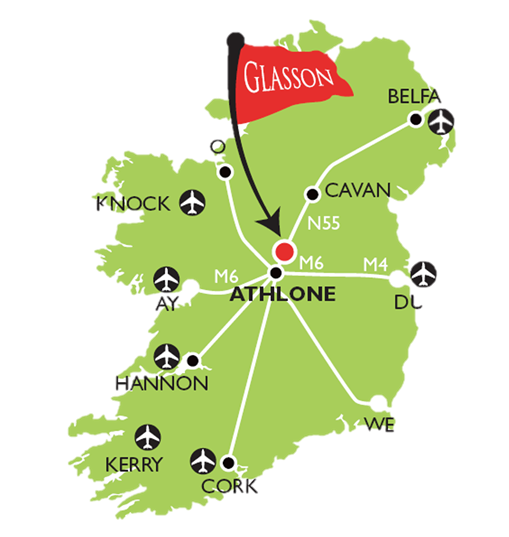
THERE ARE LOTS OF HOTELS AND GUEST HOUSES IN THE AREA – GLASSON IS NEAR ATHLONE AND THE M6 MOTORWAY – AN EASY COMMUNTE FROM ANYWHERE EAST, WEST, MIDLANDS.
Social and Other Activities

Outdoor heated swimming pool on site

Gym on each floor

Hot tubs

18 Hole Golf Course

Driving Range

Paddle Boarding

Kayaking

Row Boats (including motorised ones)
Western Anaesthesia Society
WAS
WESTERN
ANAESTHESIA
SOCIETY

SOLAR trial – Saline vs Lactated Ringers’

solar trialThe SOLAR trial, which compared a composite outcomes in perioperative colorectal or orthopaedic patients, assigned to Lactated Ringers’ (similar to Hartmann’s) solution – over 2 week blocks over a few years (8,616), has been published this month in Anesthesiology. The median volume of fluid administered in the perioperative period was 1.9L, and, no surprise here – there was no difference in outcomes.

Here is the blurb from the abstract:

“Among 8,616 qualifying patients, 4,187 (49%) were assigned to lactated Ringer’s solution, and 4,429 (51%) were assigned to saline. Each group received a median 1.9 l of fluid. The primary composite of major complications was observed in 5.8% of lactated Ringer’s versus 6.1% of normal saline patients, with estimated average relative risk across the components of the composite of 1.16 (95% CI, 0.89 to 1.52; P = 0.261). The secondary outcome, postoperative acute kidney injury, Acute Kidney Injury Network stage I–III versus 0, occurred in 6.6% of lactated Ringer’s patients versus 6.2% of normal saline patients, with an estimated relative risk of 1.18 (99.3% CI, 0.99 to 1.41; P = 0.009, significance criterion of 0.007). Absolute differences between the treatment groups for each outcome were less than 0.5%, an amount that is not clinically meaningful.”

The two litres of Saline / LR did not cause acidosis or meaningful increase in plasma chloride concentrations at 24 hours – chloride rose in both groups initially and then fell off. If the median volume of fluid was 2L – then there was a median difference in chloride intake of 80mmol – roughly what is in half a litre of saline. There is good reason to believe that hyperchloraemic fluids (such as LR and Saline) in lowish volume (2L) don’t change acid base status, due to dilution of albumin and then clearance.  It would have been really helpful to know what, if any, iv fluid was given post op and how much sodium and chloride the patients received over the 3 days of the stress response.

These results differ from the SMART-MED and SALT-ED trials – which despite extraordinarily small volumes of fluid, purported to show an increase in complications – particularly renal with saline. Presumably, critically ill and emergency room patients are at greater risk for organ dysfunction, and the additional sodium and chloride pushed a few “over the edge.”

An impressive study that shows that any anaesthesia department can do important research just by altering one component of “what we always do” every couple of weeks and then looking at outcomes from a largish cohort. It won’t change my practice, and I would dearly have liked to see the study done with plasmalyte-148 rather than LR.

Withold ACE inhibitors for surgery? Think Again

Anecdotally, the majority of anesthetists withhold ACE inhibitors (angiotensin converting enzyme inhibitors ACEI)  on the day of surgery because of concerns regarding hypotension, particularly in operations that may involve sympathectomy (spinal anesthesia) or blood loss. This appears to be a particular problem with angiotensin receptor blockers (here). We already know that withholding beta blockers and statins preoperatively is associated with an increase in the risk of myocardial ischaemia (reviewed here). ACEI were the wonder drugs of the 1980s: 1. use of ACE inhibitors provide long-term cardiovascular protection and reduce ischemic events and complications; 2. early ACE inhibitor therapy has been demonstrated to produce improved survival and heart function benefits in patients with acute myocardial infarction; 3. they are remarkably effective drugs in the treatment of heart failure and hypertension; 4.  ACEI delays the progression of diabetic nephropathy. So, is it wise to withhold these drugs in the preoperative period?

The following is a quote from a review on this topic in the Postgraduate Medical Journal: “The use of these agents before surgery has been associated with a variable incidence of hypotension during the initial 30 min after induction of anaesthesia; however, these hypotensive episodes have not been conclusively linked to any significant postoperative complications…” (here).

The following is a quote from an excellent review of the topic of drug withholding in preoperative patients: ACEI “intensify the hypotensive effects of anesthesia induction. Because angiotensin II plays a key role in maintaining circulating volume in response to stressors, volume deficits can occur in ACE inhibitor-treated patients as angiotensin II cannot compensate for venous pooling of blood, resulting in diminished cardiac output and arterial hypotension. However, continued renin-angiotensin system suppression may protect regional circulation, as has been demonstrated by reduced release of cardiac enzymes with ACE inhibitor continuation (compared with interruption) in cardiac surgery patients. ACE inhibitors also have a renal protective effect, preserving glomerular filtration rate in patients undergoing aortic abdominal aneurysm repair or coronary artery bypass graft surgery. Hypotension with ACE inhibition is treatable with sympathomimetics, alpha-agonists, and intravenous fluids.” (here). Essentially the author is referring to phenylephrine and vasopressin.

So, it may surprise you to discover that there are emerging data to support the continuation of ACEI in the preoperative setting, particularly in cardiac surgery patients. A recent article in circulation (here – subscription required – the HSE has a 1 year embargo – cheapskates!) suggests that withholding ACEI after cardiac surgery is associated with increased incidence of non fatal cardiac events:

This was a “prospective observational study of 4224 patients undergoing coronary artery bypass graft surgery (CABG). The cohort included 1838 patients receiving ACEI therapy before surgery and 2386 (56.5%) without ACEI exposure. Postoperatively, the pattern of ACEI use yielded 4 groups: continuation, 915 (21.7%); withdrawal, 923 (21.8%); addition, 343 (8.1%); and no ACEI, 2043 (48.4%). Continuous treatment with ACEI versus no ACEI was associated with substantive reductions of risk of nonfatal events (adjusted odds ratio for the composite outcome, 0.69; 95% confidence interval, 0.52–0.91;P=0.009) and a cardiovascular event (odds ratio, 0.64; 95% confidence interval, 0.46–0.88; P=0.006). Addition of ACEI de novo postoperatively compared with no ACEI therapy was also associated with a significant reduction of risk of composite outcome (odds ratio, 0.56; 95% confidence interval, 0.38–0.84; P=0.004) and a cardiovascular event (odds ratio, 0.63; 95% confidence interval, 0.40–0.97;P=0.04). On the other hand, continuous treatment of ACEI versus withdrawal of ACEI was associated with decreased risk of the composite outcome (odds ratio, 0.50; 95% confidence interval, 0.38–0.66; P<0.001), as well as a decrease in cardiac and renal events (P<0.001 and P=0.005, respectively).”

There are some unpublished data that continuing ACCEI up to surgery (and presumably afterwards) is associated with lower 30 day mortality (here). Preoperative use appears to be associated with fewer major adverse events after cardiac surgery (here), and even when no benefit has been demonstrated the agents appear to be safe (here).

So, think twice before you stop the ACEI in your preoperative visit. Nevertheless, I am still going to avoid these agents when anesthetizing patients in the beach chair position (here).